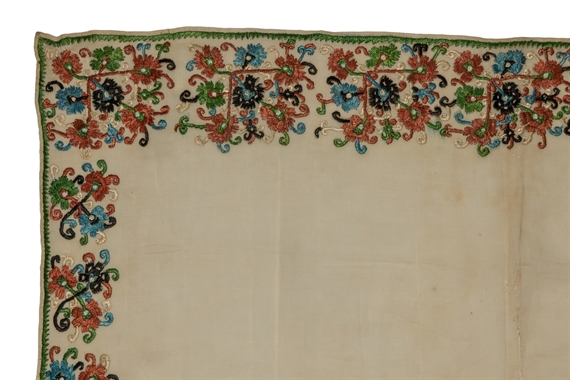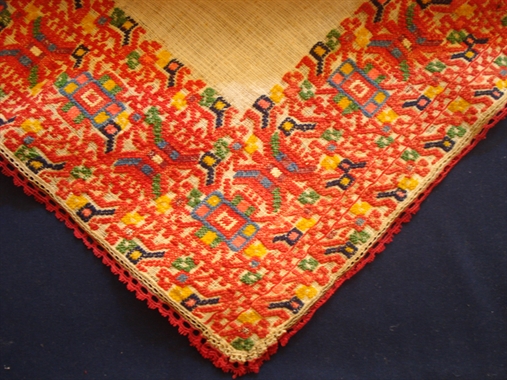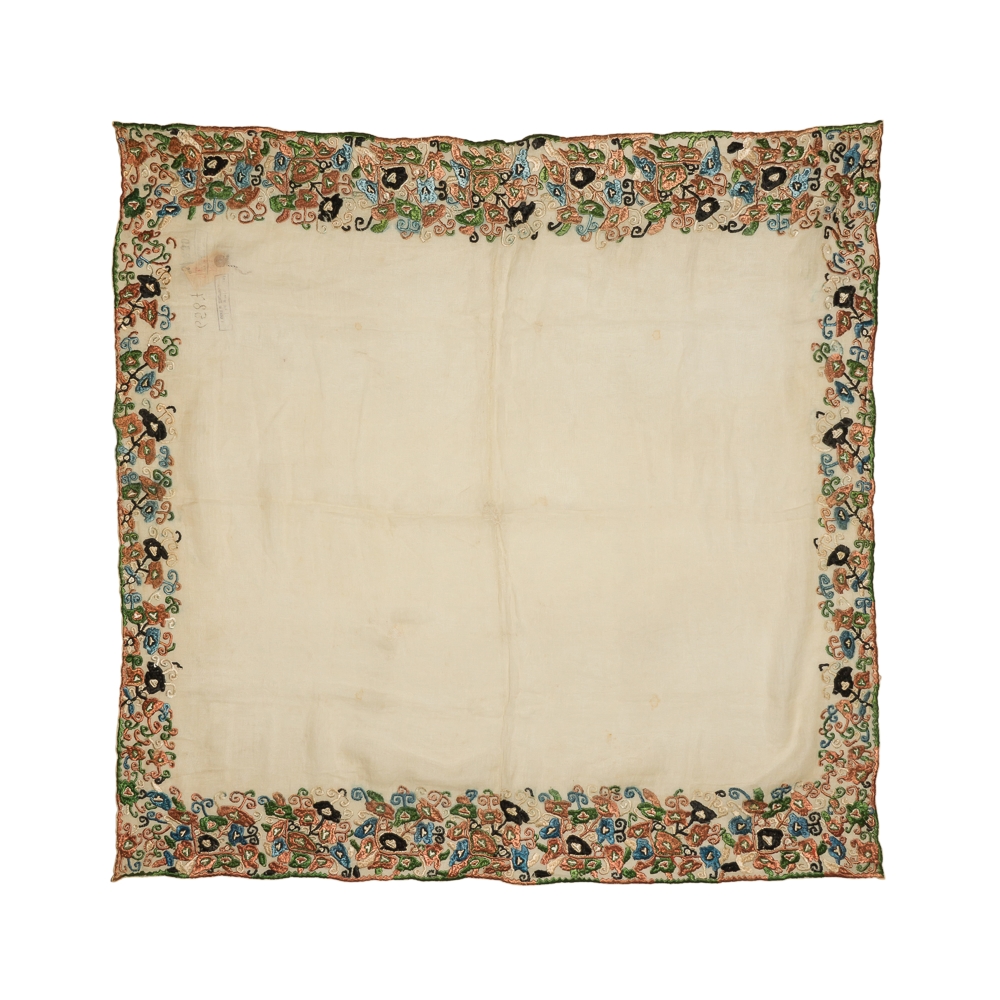
The Collection contains about 2,000 women's headdresses, the so-called peča. They are a very valuable folk textile. Women made them from home-made linen, and later also from silk. They were particularly beautifully ornamented and full of symbolic meaning. They were often considered a symbol of a married woman, although before the appearance of scarves, girls also wore them. The type and composition of ornaments determined their function. Depending on the holiday, age and weather conditions, they were tied differently. In its current form, the Collection exists since 2015, when the objects were separated from the Collection of Traditional Costumes of Central Croatia. Namely, the Collection contains many objects of the same type that were included in the Museum's initial holdings when it was founded. This Collection is closed. Many examples of peča date from the first half of the 19th century, and some from the late 18th century. In the mid-19th century, these objects were given the status of Croatian folk/national art, so many collectors began to collect them. According to the criteria of the time, only the ornamented parts of the headdresses were valued: weaving, embroidery and lace. In accordance with the efforts of the authorities of the time to promote the products of local crafts and rural cottage industry, this material was intended to serve as a teaching aid for students of the Craft School, but also as an inspiration for artists. Due to the different meanings that headdresses have in human life, especially in the context of identity, over the past 100 years peče have been one of the most frequently collected, interpreted and exhibited objects in the Museum.
We use cookies to track visits to our pages (Google Analytics) for the purpose of improving the pages. The statistics are collected anonymously, and by accepting, you agree to the use of cookies. Find out more